At home with cookbook author Elizabeth Hewson
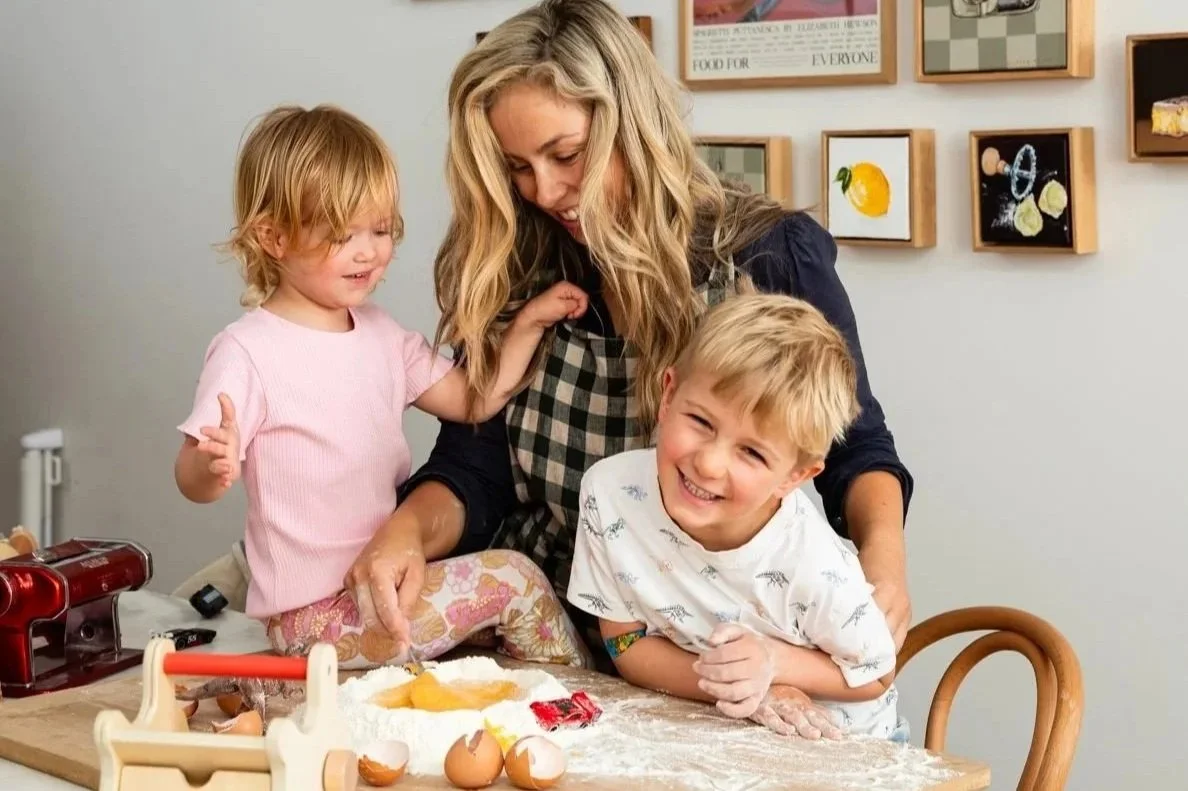
A conversation about food, home, motherhood, small everyday rituals and taking the pressure off.
As the founder of Saturday Night Pasta, cookbook author and mother of two young children, Elizabeth Hewson has built a world around cooking that feels refreshingly real; one where dinner can be toast, where imperfect meals still matter, and where the rituals around food are often just as important as the food itself. Her brand-new cookbook, Home Food, celebrates all of this.
What I loved most about this conversation is its relevance to modern motherhood and the realities of trying to hold everything together while still creating moments of comfort and connection at home. Lizzie shares the honest realities of balancing business and family life, and why she believes home cooking should relieve pressure rather than create more of it.
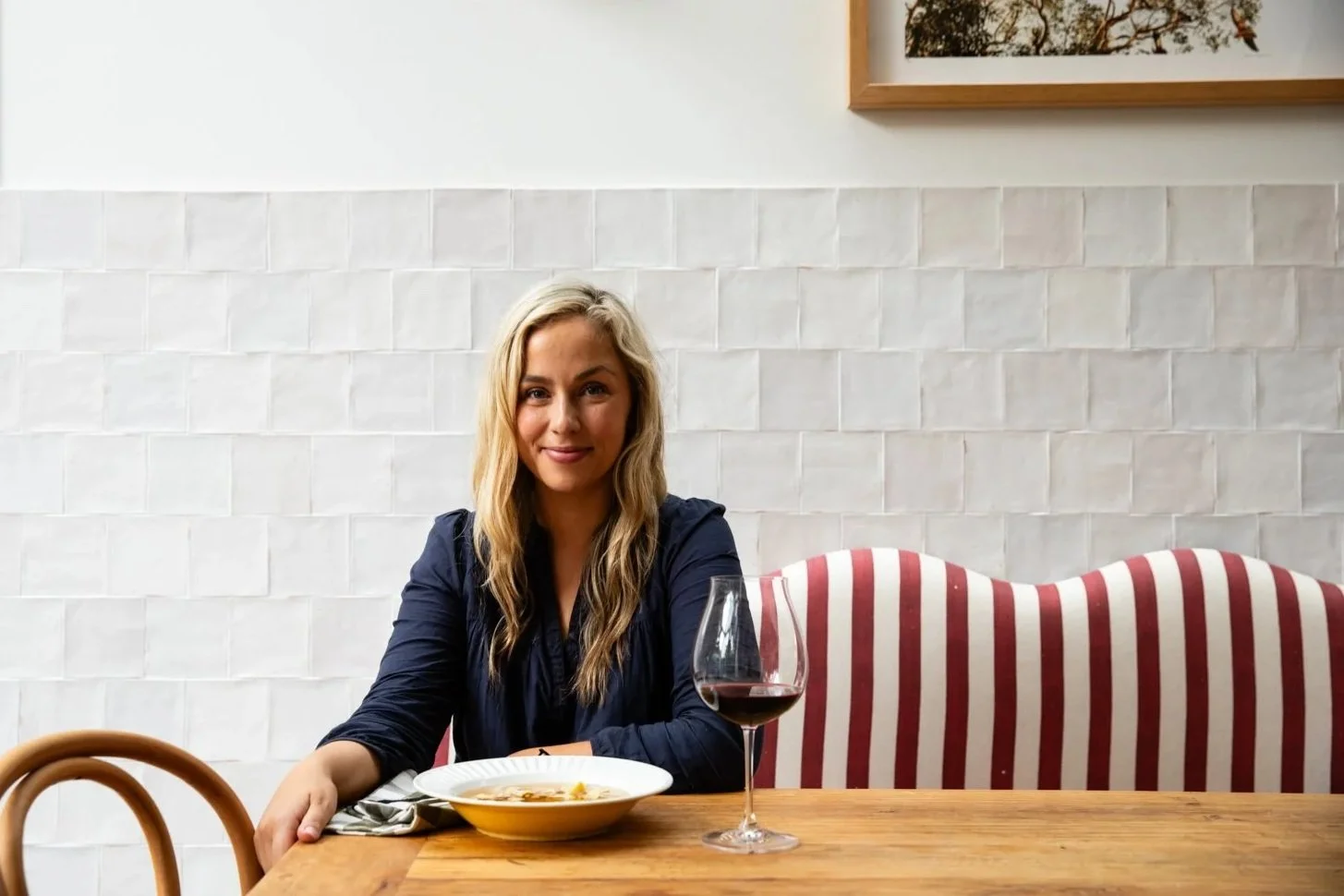
ALL photography by Nikki To
You’re a cookbook author, columnist, founder of Saturday Night Pasta and mum to two little people...how on earth do you fit it all in? What does a normal week look like for you?
I ask myself that most weeks too. The honest answer is - I don’t. I’m barely holding things together. But I have chosen to work like that, and suspect it’s how I’m wired. I’m lucky to love what I do, so whilst it’s relentless, I am passionate about it. I have two little kids, Louis who is six and Remi who is three, and they very much dictate the rhythm of my days. I am living in the trenches. Louis has started school this year so I’m trying to adjust to school hours too.
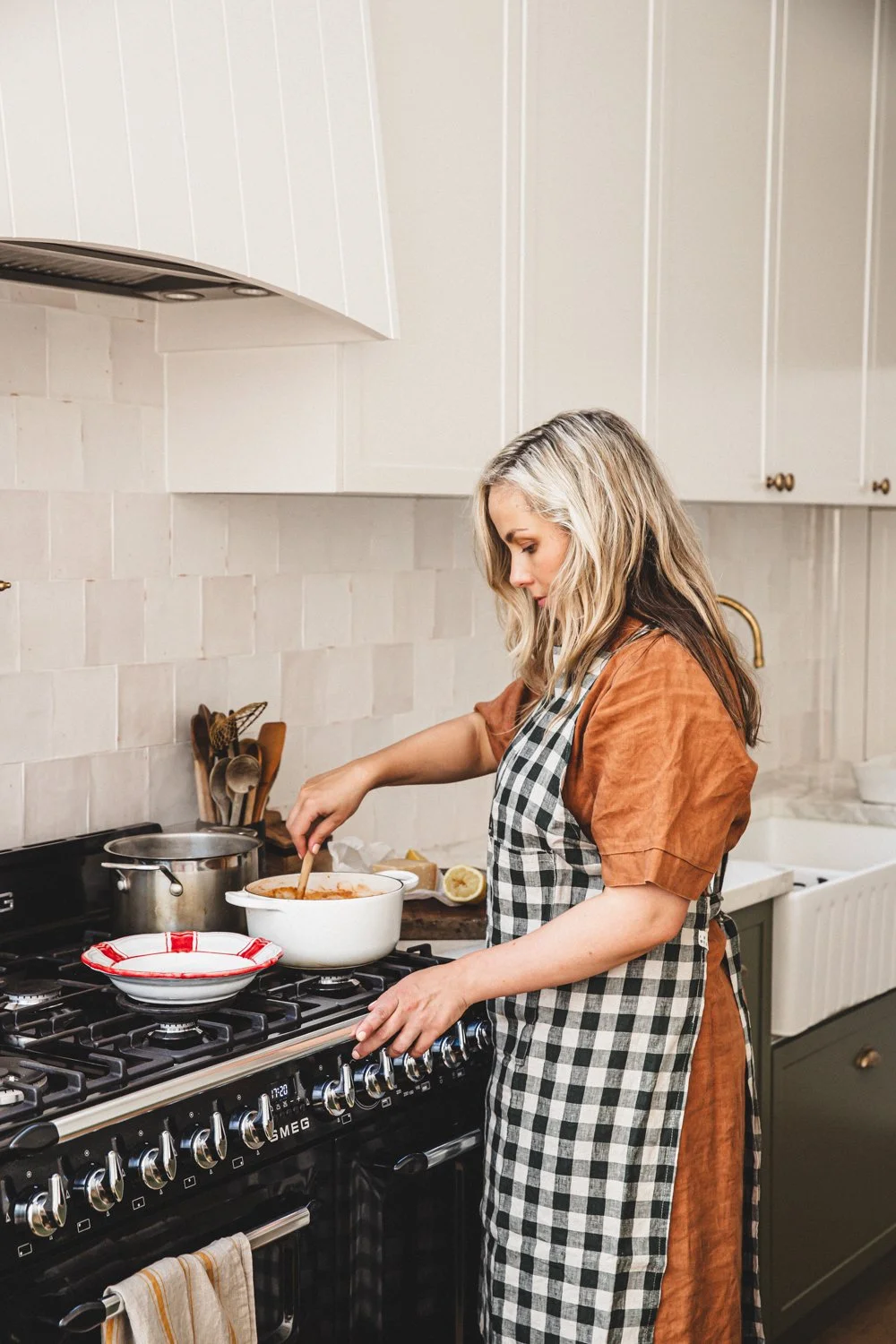
A normal week is usually a mix of recipe testing, writing, filming content, excel spreadsheets and staring into my XERO account trying to make sense of the operations side of running a small business, attempting to stay on top of emails (which I’m terrible at), riding the emotions of running a small business, school and daycare pick ups, and cooking dinner every night regardless of how chaotic the day has been. That’s important to me, even if it’s toast. I work from home, which I love, because even though it can feel messy, everything is intertwined - motherhood, cooking, work, home life. My recipes are very much shaped by the season of life I’m in.
“Some of the best meals I’ve ever made have been messy, improvised or slightly wrong. Home cooking should relieve pressure, not create more of it", says Lizzie.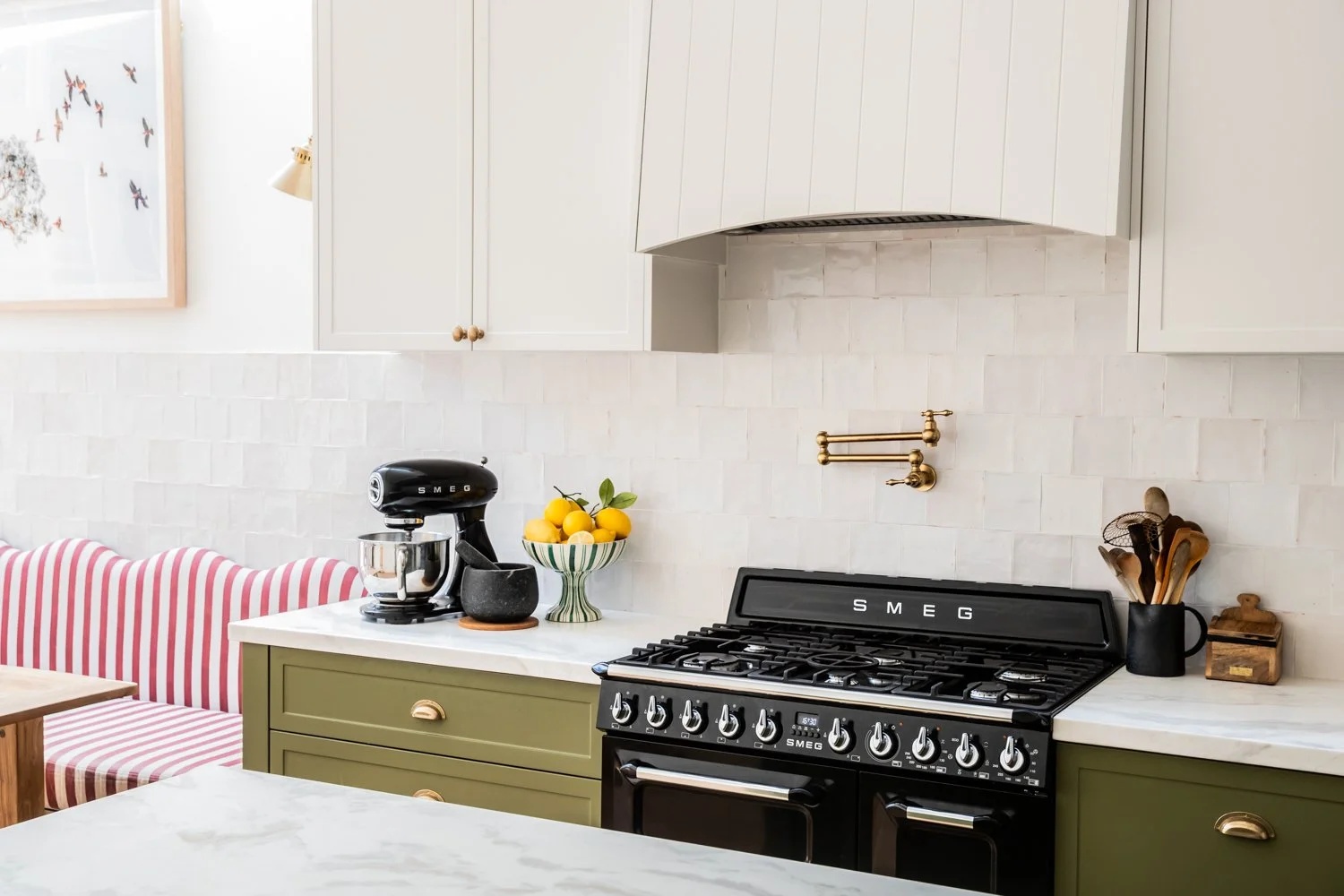
Where did your love of food begin?
I’m not really sure. I’ve just always loved it. I suspect it stemmed from loving eating, which then, as a naturally curious person, led to cooking. I get a lot of joy from feeding people and sharing food.
A few early memories stand out - making scones with my grandmother, hosting a three-course dinner party for my 10th birthday, playing restaurants with my parents (I still remember reheating a chicken breast in the microwave and watching it shrink). One memory that really sticks with me is eating warm porridge with cream at a friend’s family farm. It sounds so simple, but I still associate certain foods with feeling safe, cosy and cared for.
They’re all memories built around food, and the rituals that sit around them. I think that’s what I’ve always chased through cooking, not perfection, but feeling.
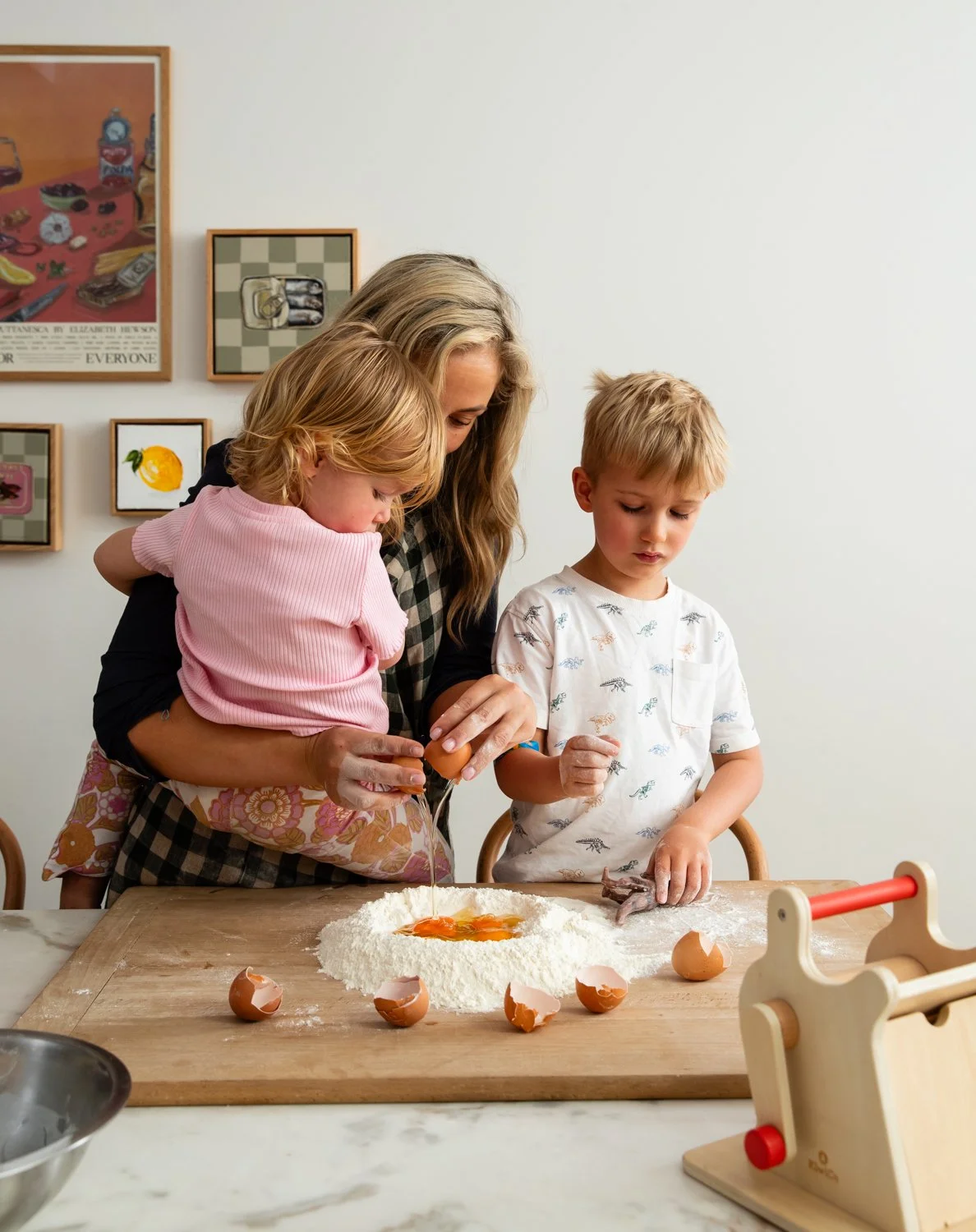
What do you think the difference is between a home where food is purely functional, and one where it’s woven more into the day-to-day fabric?
I think food changes the feeling of a home. In homes where food is purely functional, meals can become another task to tick off - and that’s okay, and often the reality in my house too. But when food is woven into daily life, even in small ways, it starts to create rhythm and connection. That doesn’t mean elaborate dinners or beautifully styled tables every night. It’s more subtle than that. Even on the busiest days, there’s something about making the effort to cook something for yourself. There’s value in that small act. Food has this incredible way of slowing people down and grounding them in the moment.
Saturday Night Pasta started as your own at-home ritual. Why do you think that simple idea resonated so widely, and eventually grew into a brand and product range?
Saturday Night Pasta really began because I craved ritual in my own life. At the time I was working long hours, often anxious and overwhelmed, and SNP became this anchor point in the week. It wasn’t just about pasta - it was about creating a reason to come home, open a bottle of wine, cook slowly and make ordinary life feel special. It allowed me to be present.
I think it resonated because people are craving exactly that. We live so much of our lives online and at a frantic pace, and there’s something deeply comforting about simple rituals at home. The brand grew very organically from there because people connected to the feeling behind it, not just the recipes themselves. I soon realised that whilst I got a lot out of making pasta from scratch - a time where I could truly be present - I saw that wasn’t the case for everyone. Some got equal rapture in tearing open a packet, popping a jar of sauce and having a delicious dinner (without compromise) in 10 minutes. After having kids, I too, found that. Life seems busier, fuller, more relentless now days and I wanted to create a range that not only helped, but meant something too.
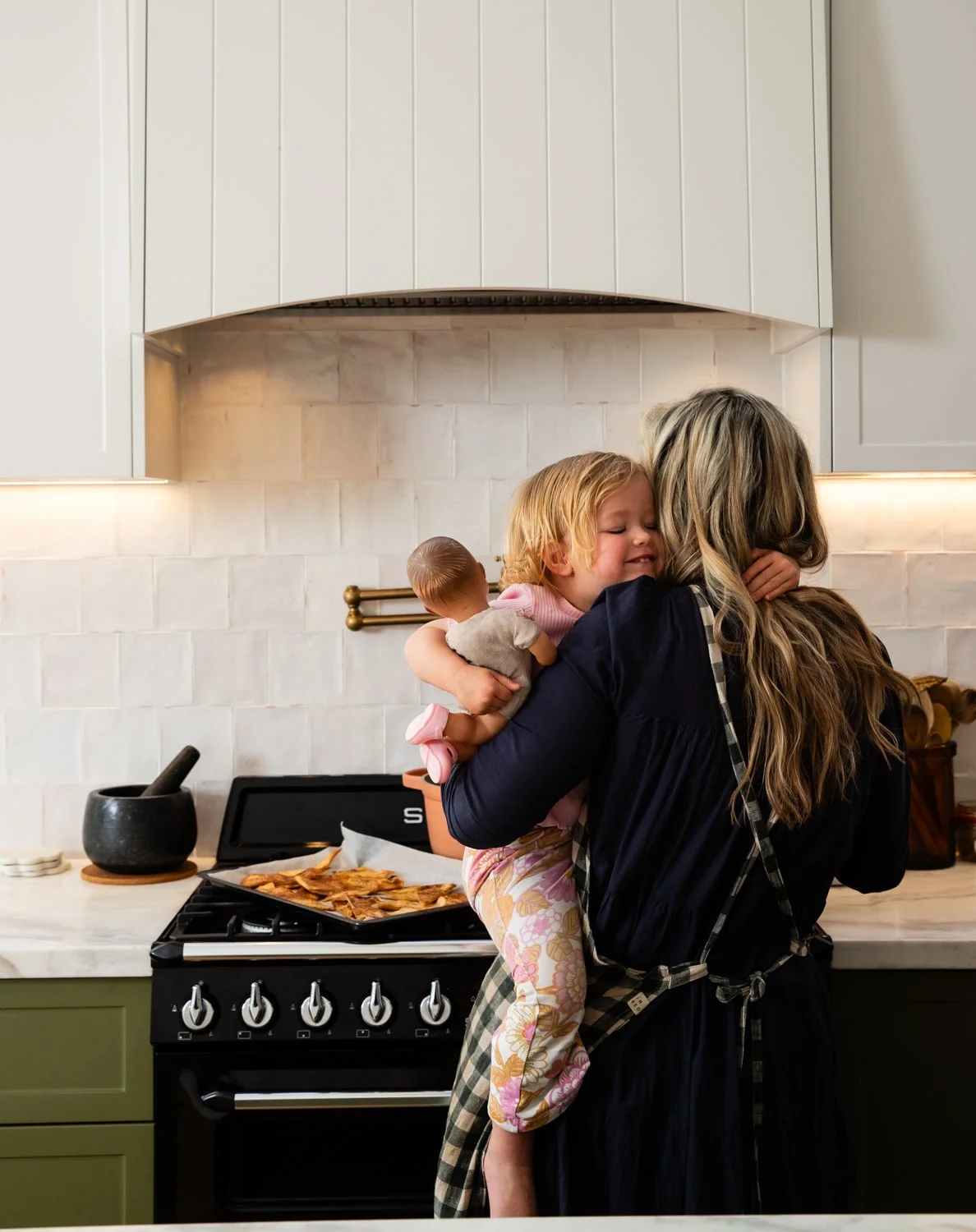
You’ve said you’re a real homebody. What is it about home that you love most?
Home has always felt like my sanctuary. I love pottering around the house. My greatest pleasure is pottering stove side, taking my time, enjoying the ingredients and where they lead me. I think because life can feel noisy and overstimulating, especially with little children, I really crave the comfort and familiarity of home. I love the rituals attached to it too. Morning coffee in the same spot, dinner together at our table, writing in my office. Those small repetitive things make me feel grounded.
You renovated your home a few years ago & I’d love to know the three things in your kitchen that have changed the way you cook or live?
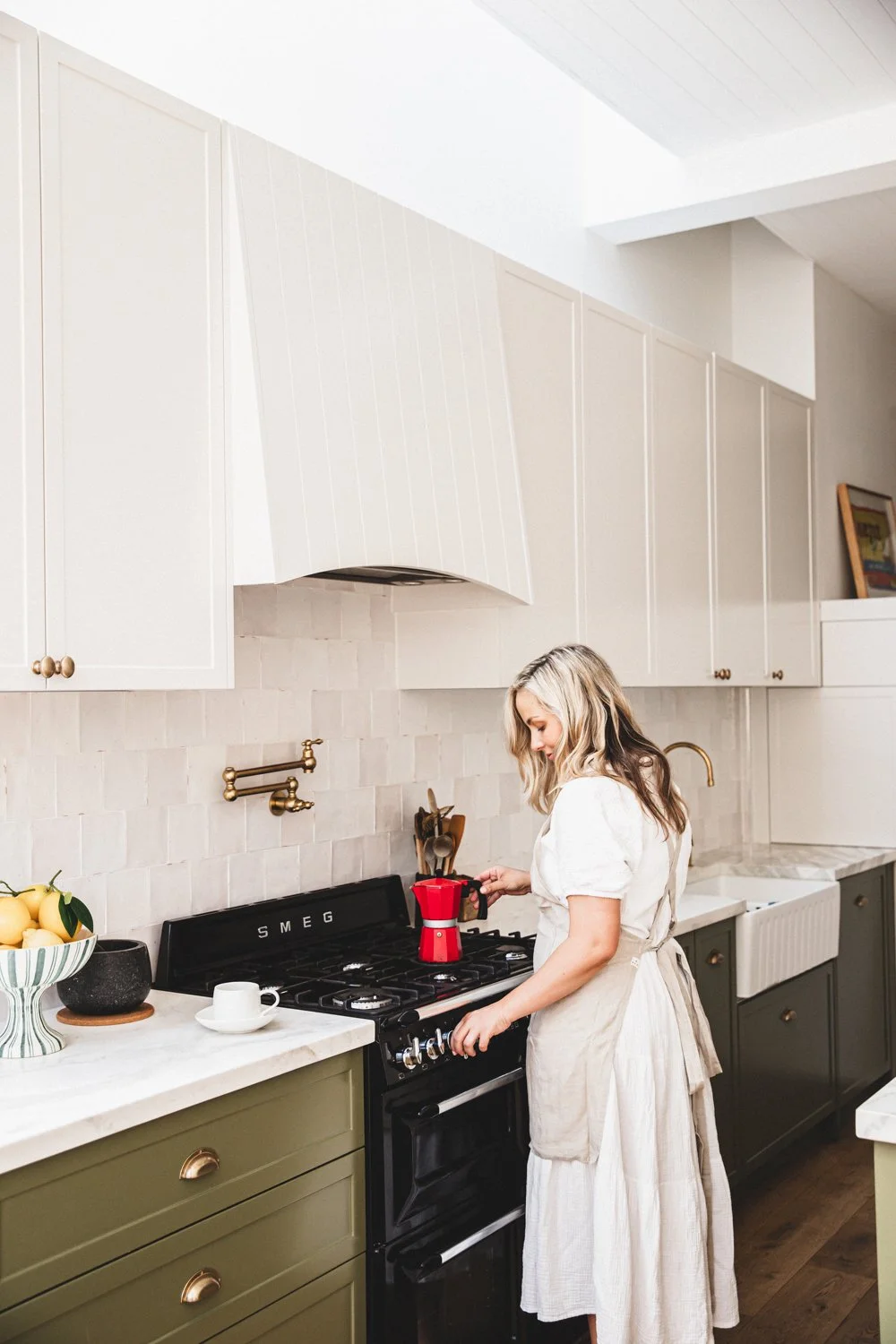
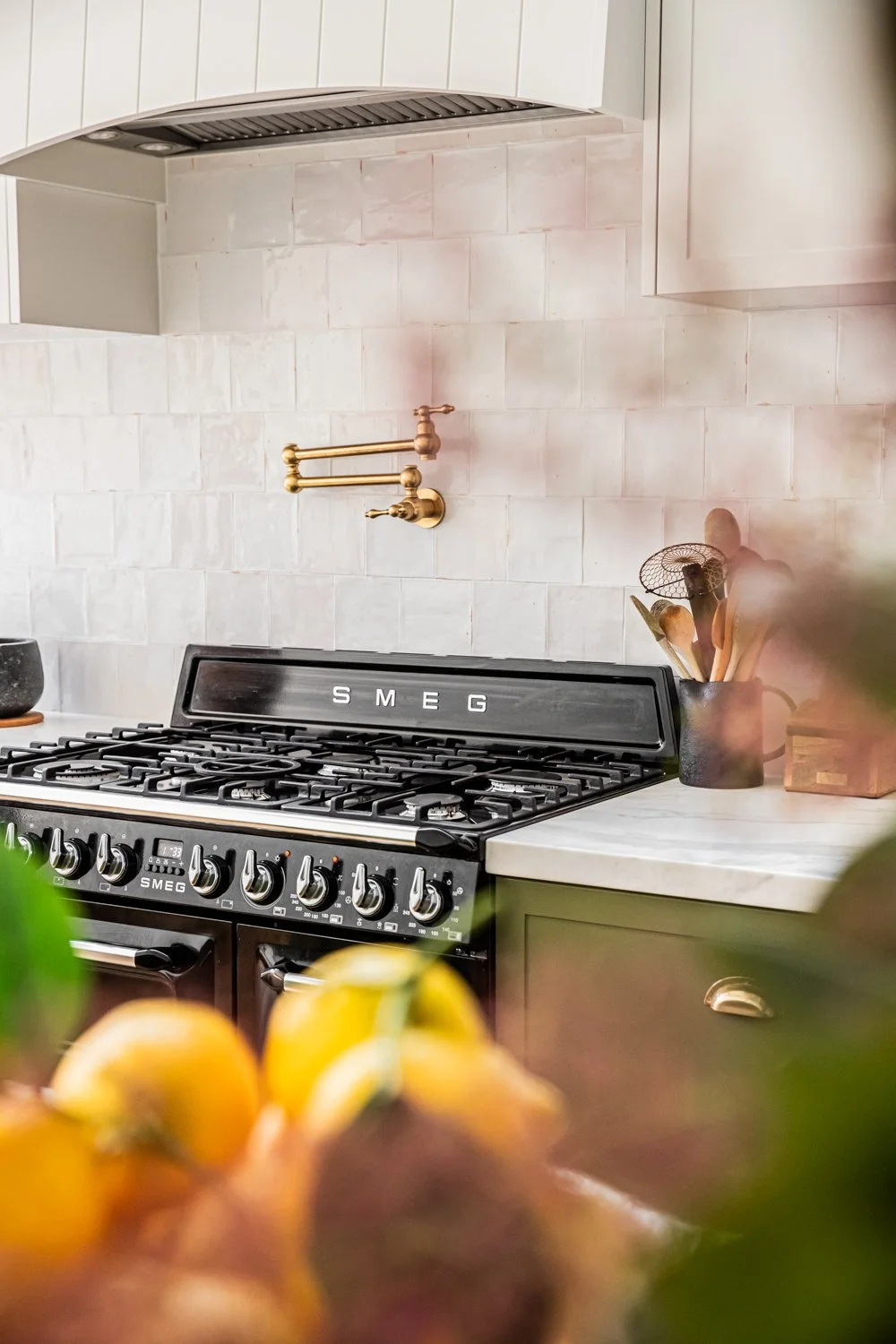
Renovating completely changed the way we live. I remember our next-door neighbour who was also renovating, told me I was crazy to make our kitchen so big in such a small space (I’d say it takes up half the bottom floor) but it’s the heart of the home for us. It’s where we live. The first thing would be a big island bench. The kids sit there while I cook, people gather around it when friends come over, and most of life seems to happen there. I’m so glad I didn’t put a sink, or stove on it, instead gave myself a lovely big space.
The second would be good storage, which sounds boring but honestly, having good storage is essential. Having a functional kitchen makes cooking feel calmer and easier.
And the third would be my having a light and airy space. It makes such a difference that it’s a light filled spaced, which is hard in a terrace with no windows. Our architect (Jaye O’Dywer, SANN STUDIO) was very clever with ceiling heights and sky lights.
FOR MOTHERS feeling stuck THE DAILY GRIND, what are your tips for making an ordinary weeknight at home feel a bit less ordinary?
I think lowering expectations helps enormously. During busy seasons, especially with young children, I’m not trying to create magic every night. Sometimes making an ordinary weeknight feel special is as simple as pasta in bowls on the couch, breakfast for dinner, or even making something that feels special, but in reality, is easy to throw together (Fish for example!). Dessert helps too.
Music changes the mood of a house instantly too. And I’m a big believer in cooking one thing really well rather than trying to do too much. A roast chicken, a pot of pasta, soup with good bread - simple food can still feel beautiful and comforting.
You describe ‘HOME FOOD’ as being for imperfect cooks living real, imperfect lives — which feels refreshing. I think a lot of us hesitate to even try a recipe if we know our version won’t look like the photo or taste as good as it should. What’s your advice for letting go of the pressure to always get it right?
I think we’ve become so used to seeing perfectly styled food online that people forget recipes are meant to be lived with, not performed. Some of the best meals I’ve ever made have been messy, improvised or slightly wrong. Home cooking should relieve pressure, not create more of it. A burnt edge, chunky chopped veg, a cake that sinks in the middle - none of those things stop food from bringing comfort or joy. I always say that the goal of cooking at home isn’t perfection. It’s feeding yourself and the people you love. Once you let go of trying to make things look exactly like the photo, cooking becomes far more enjoyable.
What’s on your table for WINTER entertaining this season?
Winter is one of my favourite seasons to cook in (although I say that every season as I’m reacquainted with the ingredients and mood). I naturally gravitate towards slower, more comforting food once the weather cools down. At the moment I’m making lots of broths, stews, soups and puddings.
A few favourites from Home Food would probably my ‘It’s-going-to-be-OK’ chicken stew (a mid-week stew to soothe the soul), Happy soup (who doesn’t want to be eating that?), throw together brothy bowls, my molten pumpkin pasta bake with sage and mozzarella and my slow cooked curried beef cottage pie (gosh I could keep going as my favourites tend to fit my moods)
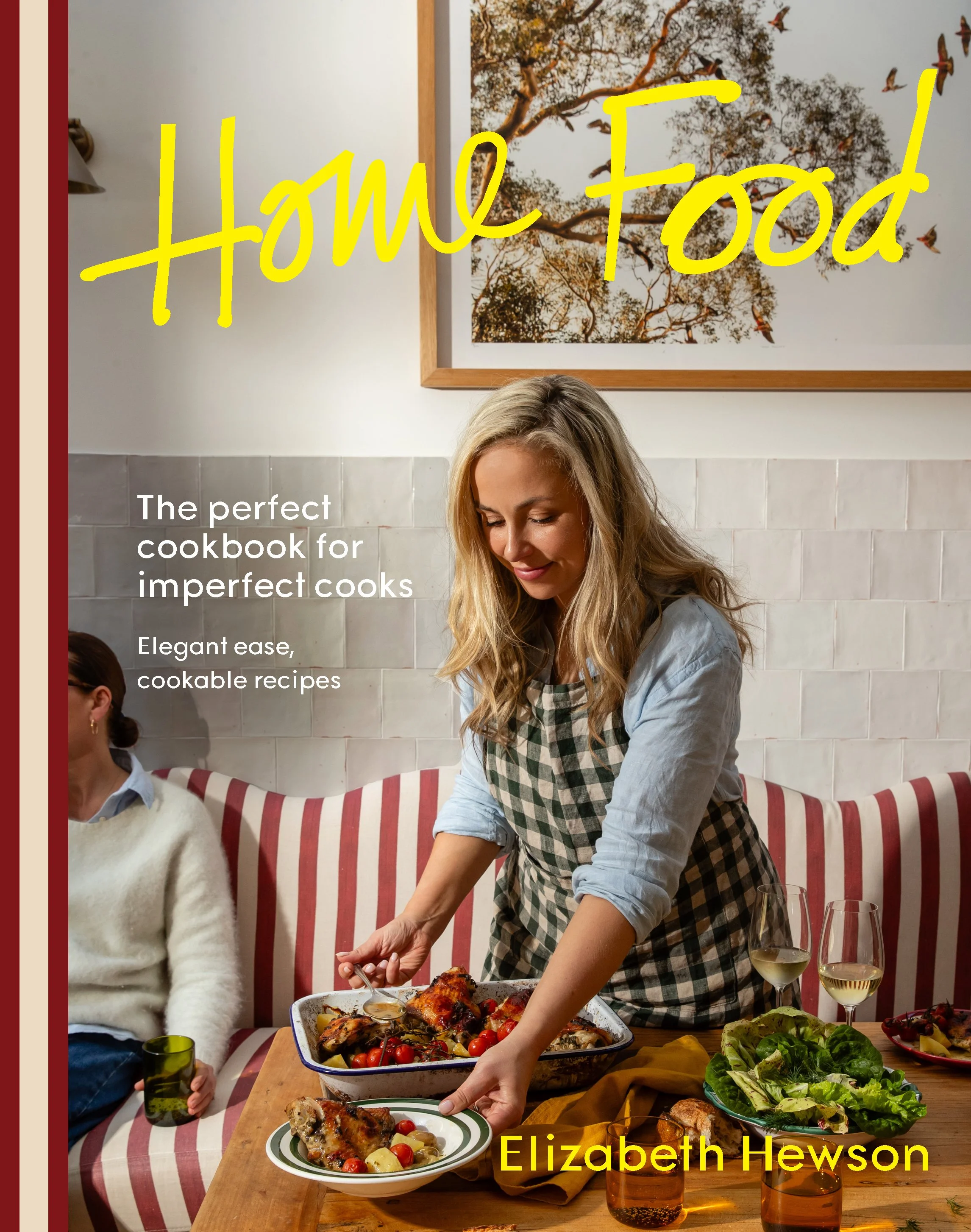
Images and text from Home Food by Elizabeth Hewson, photography by Nikki To. Murdoch Books RRP $45.00.
From the pages of Home Food: the perfect cookbook for imperfect cooks
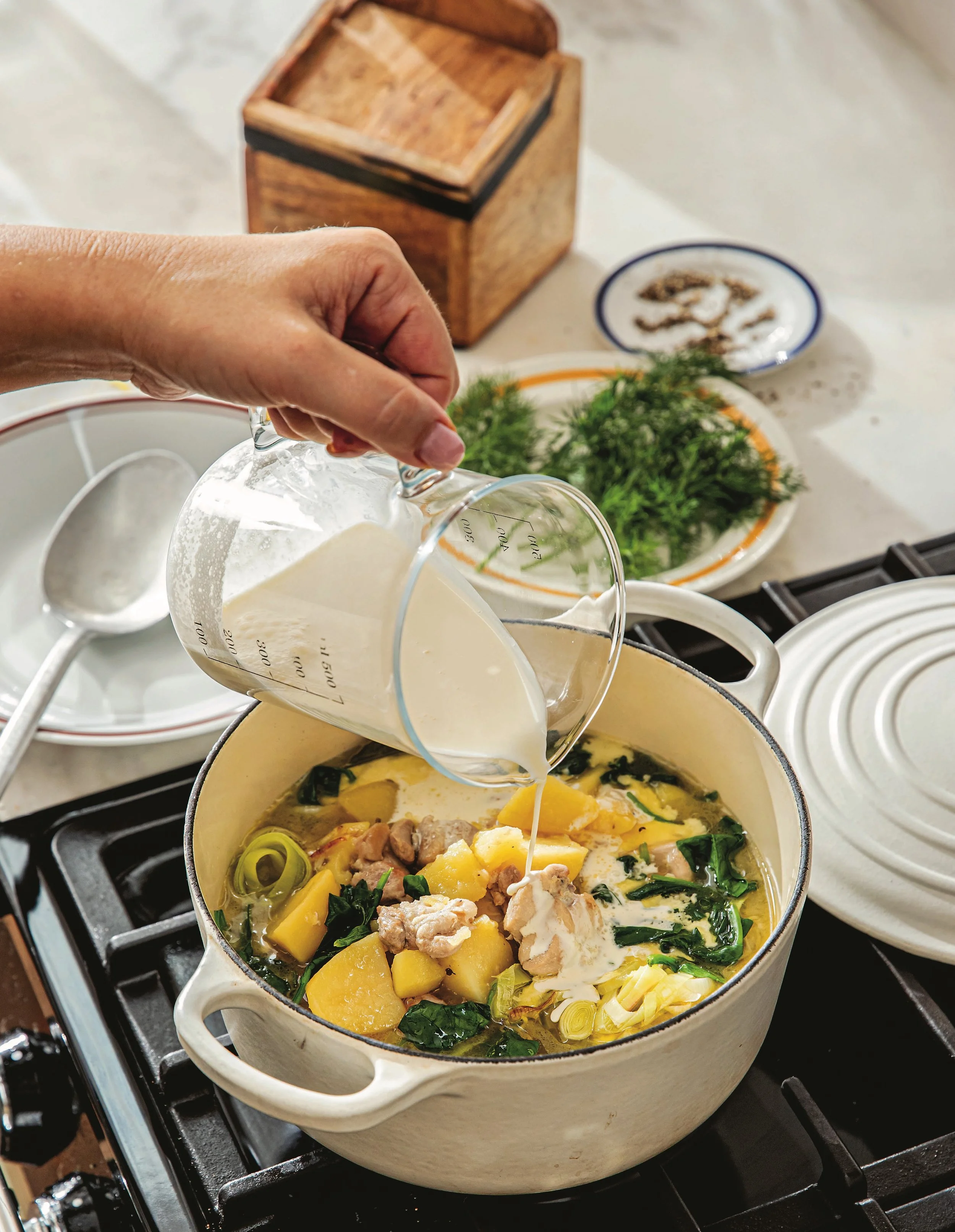
For your winter entertaining: Lizzie’s It’s-going-to-be-OK stew
This is exactly what you need for those days that go off course. Unlike most stews, which need hours to simmer away, this one comes together quickly. You can dress it up with extra vegetables or flavours, but I love it just the way it is – gentle and uncomplicated. Since peeling and chopping garlic is my least favourite kitchen task, I smash the cloves in their skins and toss them in to gently perfume the stew, plucking the skins out before serving. Feel free to peel and finely chop your garlic cloves if you have more patience than I do.
Serves 4–6
20 g (¾ oz) butter
1 tablespoon olive oil
500 g (1 lb 2 oz) chicken thighs, roughly cut into bite-sized pieces
1 leek, thinly sliced
6 garlic cloves, smashed
1 teaspoon salt
1 cup (250 ml) white wine
2 cups (500 ml) chicken stock or water
400–500 g (14 oz–1 lb 2 oz) potatoes, peeled and chopped into chunks
3 bay leaves
juice of ½ lemon (or to taste)
½ cup (125 ml) pure
(single/pouring) cream
125 g (4½ oz) baby spinach
chopped flat-leaf parsley, chives or dill, to garnish
Get ahead:
You can prep the potatoes in the morning and leave them submerged in a bowl of water in the fridge. The chicken can also be cut and stored in an airtight container for 3 days.You can make the stew up until the addition of the lemon, cream and baby spinach and refrigerate for 3 days. Reheat and add the lemon, cream and spinach just before serving.Place a large saucepan with a lid over medium–high heat. Melt the butter and olive oil, then throw in the chicken pieces and brown on all sides – this will take roughly 5 minutes. Throw in the leek and garlic cloves and toss them with the chicken, then season with the salt. Cook for 2 minutes, until the leek starts to soften.Pour in the white wine and bring to a simmer, using a spoon to scrape all the sticky bits off the bottom of the pan. Simmer for 2 minutes, then pour in the chicken stock or water, followed by the potatoes, bay leaves and plenty of black pepper. Taste and adjust seasoning if needed. Bring back to a simmer, then reduce the heat to low, put the lid on and cook for 30 minutes, stirring every now and then.Check the potatoes are cooked by piercing them with a knife – they should be soft and offer no resistance. Turn off the heat then add the lemon juice, cream and baby spinach. Stir through to wilt the spinach. Fish out the garlic skins, and serve immediately with a good grind of pepper, an extra drizzle of cream, if you like, and fresh herbs. Leftovers:
This stew will keep in the fridge for 3 days. When reheating it, I like to add some extra stock, cream, lemon and baby spinach to give it more life.When friends leave your home after a dinner party, what do you hope they’re walking away with?
Hmm, I think more than anything, I hope people leave feeling cared for. Not impressed but cared for. I want people to feel relaxed in my home, like they could stay longer than planned, have another glass of wine, scrape the last bits from the serving bowl. I think the best dinner parties are the ones where people feel comfortable enough to properly exhale. That’s always the feeling I hope to create. And I think that all starts with the food you serve. Simple, approachable and nostalgic.